

Two nights away, alone, with nobody to consult about dinner. For most people the idea is thrilling and mildly terrifying in the same hour. The good news is that a solo weekend is the smallest possible version of a trip. It fits in a backpack, it rarely requires a flight, and if it goes sideways you are home by Sunday evening with a story instead of a disaster. The trick is planning just enough: structure for the parts that need it, open space for everything else.
Start With the Shape of the Weekend, Not the Destination
Friday evening to Sunday afternoon gives you roughly forty usable waking hours. That is not enough for a grand tour, and pretending otherwise is how first trips turn into errands with a suitcase.
Before you open a map, decide what you want the weekend to feel like. Long walks and a good book? A city with three museums and a bakery you keep returning to? A cabin where the biggest decision is whether to make coffee before or after the loop trail? Both are valid. They just lead to different bookings.
It also helps to know which kind of trip you are taking. A be there trip has one base and no repacking. A move through trip has two or three stops and more logistics. For a first solo weekend, choose the first kind. You can always graduate.
Choose a Route You Can Bail Out Of
Keep the first trip within two or three hours of home by train, bus, or car. This is not timidity. It means that a cancelled booking, a twisted ankle, or a sudden case of I want my own bed is an inconvenience rather than a crisis.
Watch out for connections that run once a day. A rural bus that leaves at 6:40 a.m. and returns at 5:15 p.m. the next day turns a relaxed weekend into a hostage situation. Transit you can use twice a day, in both directions, is the single most freeing thing on your itinerary.
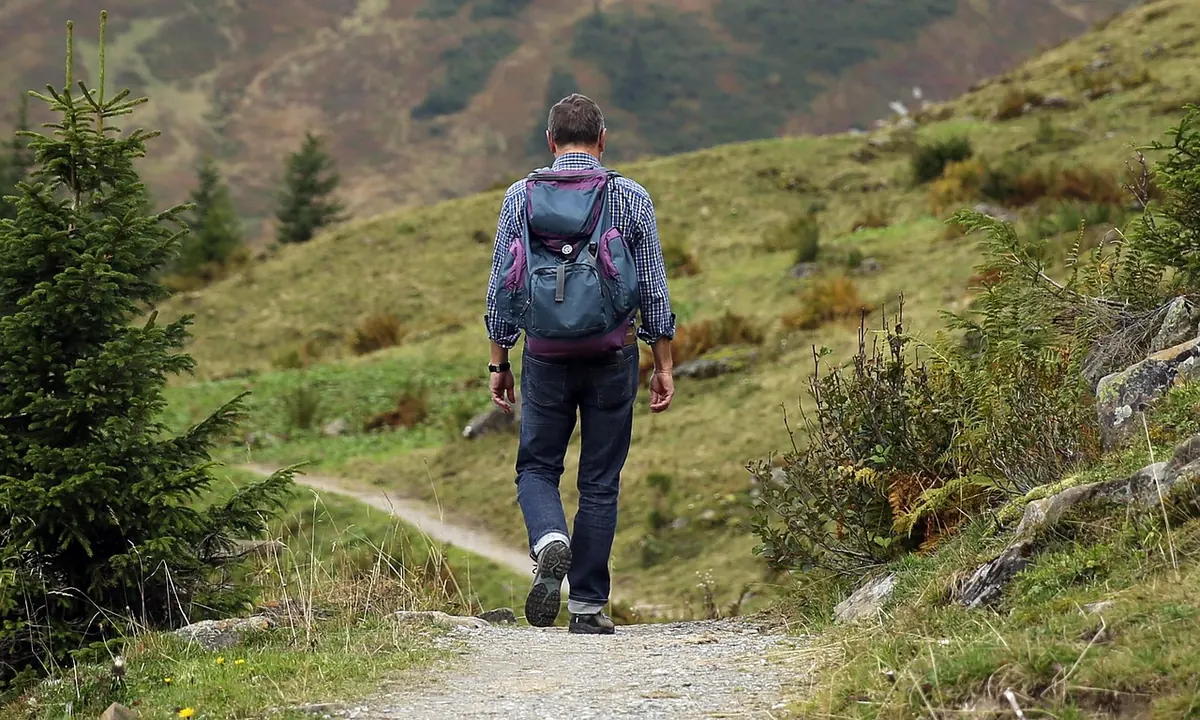
If you are walking or cycling, plan for about two-thirds of the distance you would cover with company. You will stop more, take more photos, and get mildly lost once. A linear route with public transport at both ends is friendlier than a loop, because you can quit at any point and still get back.
Three route shapes that work well
- The walkable small city. Arrive by train, stay near the centre, and cover it on foot. Everything you need is within twenty minutes.
- The park with a roof. A state park or nature reserve with cabins, a lodge, or a campsite, plus one well-marked trail. Limited choices, which is the point.
- The place you already know. A city you have visited with friends but never alone. Familiar streets remove the navigation stress, and being alone supplies the novelty.
Book the Bones, Leave the Rest
Book exactly two things in advance: where you sleep and how you get there. Mostly everything else can be decided on the day, and should be.
For a first solo trip, pick accommodation with a staffed desk rather than a keyless apartment. Being able to ask a real person where to eat, how late the streets stay busy, and which bus goes where is worth more than a nicer bathroom. A private room in a hostel gives you the desk without the dorm. Read recent reviews for location, noise, and safety of the immediate area, not for the wallpaper.
Where possible, choose free cancellation. Plans change, and the freedom to move is part of what you are paying for.
The Safety Basics That Actually Matter
Traveling alone does not require paranoia. It requires a handful of habits that become automatic after one trip.
- Send someone your plan: where you are sleeping, roughly what you are doing, and when you expect to check in.
- Arrive in daylight if you can, especially somewhere unfamiliar.
- Carry a charged phone, a small battery pack, and the address of your accommodation written on paper.
- Keep your bag with you. A bag on the back of a chair is not with you.
- Learn the last train or bus time, and save a taxi app before you need it.
- Trust the flat feeling. If a person, a bar, or a street gives you nothing but a low hum of discomfort, leave. You owe no one an explanation.
Go easy on the second drink. Judgment is the first thing that leaves when you are somewhere new and alone, and it is the thing you most need. If you take regular medication, bring more than you need and keep it in your hand luggage. For anything specific to your health, ask your doctor rather than a travel blog.
Pack Light, Then Take Something Out
One bag, carried on your back or shoulder, is the goal. You are not moving house; you are covering two days.
- Two tops, one mid-layer, one light rain shell
- One pair of trousers you can walk miles in, plus one pair to sleep or eat in
- Three pairs of socks and underwear
- A small toiletry bag. Buy what you forget
- Charger, battery pack, earplugs, eye mask
- Water bottle, a snack, plasters, and painkillers
Pack the night before, then walk around the block with the bag on. If it annoys you at home, it will be a genuine problem by hour four. A lighter bag also changes your behaviour: you will wander further, sit down more willingly, and stop guarding a pile of luggage at every café.
Build In Unscheduled Time
This is where first trips usually go wrong. A weekend packed with reservations feels productive and ends up feeling like work.
Give each day one anchor. Saturday's might be a museum and a specific dinner. Sunday's might be a walk along the river before the train home. Everything else is loose. If you find yourself sitting in a café for ninety minutes with a book and no plan, that is not a gap in the itinerary. That is the itinerary.
Unscheduled time is also your buffer. Trains run late, legs get tired, and the best part of a town is often the street you didn't mean to walk down. Leave room for it.
Go, and Take Notes
Pick a date three or four weeks out. Book the bed and the ticket. Send one person your plan. Pack the night before so the morning is calm. Then go, and treat the whole thing as a test run rather than a performance.
On the way home, jot down three things: what you would do again, what you would skip, and one place you want to return to with more time. That short list is worth more than any guidebook, because next time it will be your own. The weekend does not need to be impressive. It needs to be yours.
Photo: Hermann / Pixabay
Related posts
More stories you’ll love reading